SEMOR-3D: Safety Enhancement of Maintenance Operators in Railway worksite- 3D Modelling of Critical Areas
Semor improves the safety of maintenance activities for railway tracks
Semor aims at complementing the existing safety systems with a precise position estimation system
in order to improve their accuracy and effectiveness
SEMOR 3D – Presentation


Semor concept
What Semor is made of:
Safe
zone
Draw on the working site the safe and unsafe areas
Passing train detector
Receive and visualize directly from the trackside detection device whenever a train approaches the working area
Portable Individual localization and alerting Device (PID)
Warns the worker with an acoustic / visual alarm
Central Supervision System (CSS)
To receive and visualize from every device confirmation that each worker is safe
Final
decision
To allow the train passage in accordance with each worker asserted safety status
Juridical
recording
Tracks of each operation, preserving the workers’ privacy
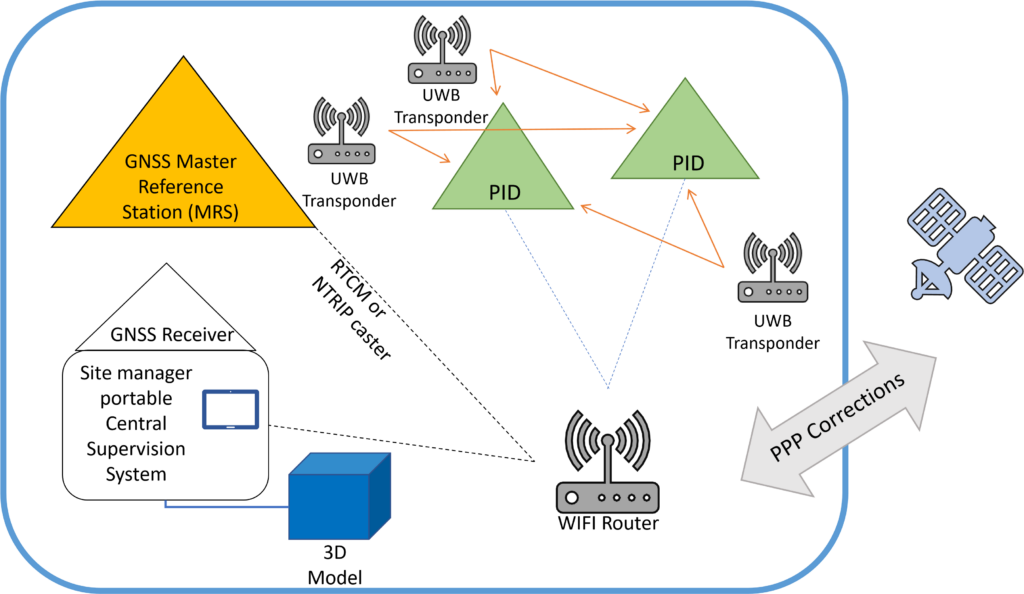
Semor 3D Architecture
The system includes four subsystems:
- Master Reference Station (MRS):
Dual frequency GNSS receiver with a geodetic level GNSS antenna; - Portable Individual localization and alerting Device (PID);
- Portable Central Supervision System (CSS);
- Router LTE;
- Local wireless network.
SEMOR 3D goal: precise and robust real-time location of workers
Position detected through the integration of:
Global Navigation Satellite System (GNSS)
For localization accuracy correction.
Two different systems:
GPS RTK and Galileo PPP
Inertial Navigation System (INS)
For the verification of the actual movements
of workers through an
Inertial Measurement Unit (IMU)
Precise positioning in critical zones (UWB)
Maintain position in areas where GNSS technology is unusable through ultra wide band (UWB)
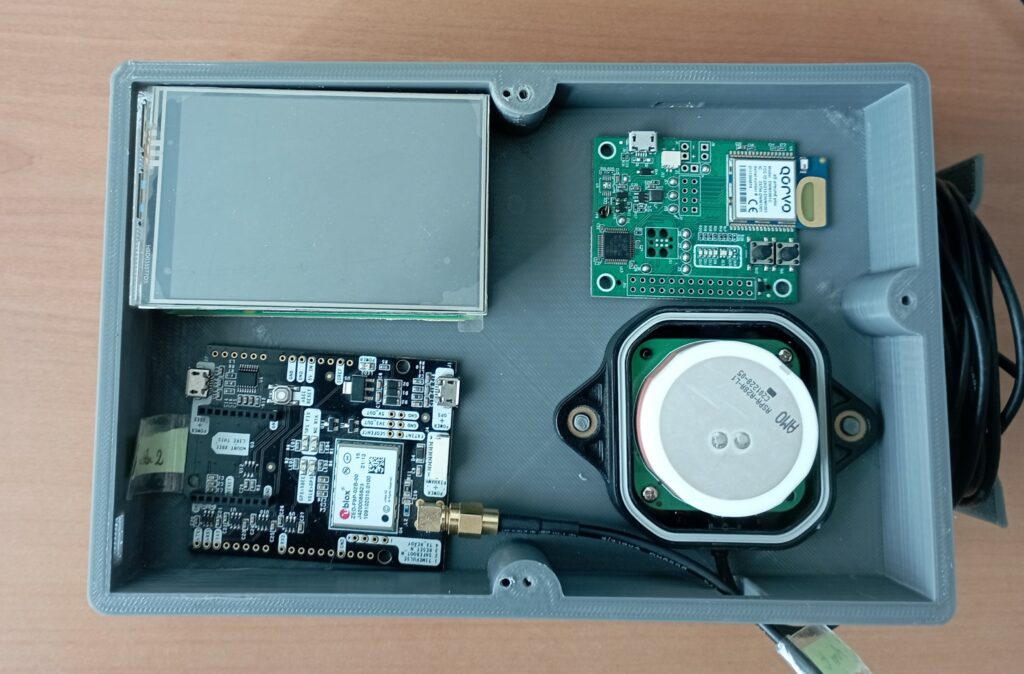
PID’s components:
- • Raspberry PI
- • 4 colour Led & 1 Button (first prototype)
- • Touchscreen (second prototype)
- • Piezoelectric Buzzer
- • IMU
- • UWB
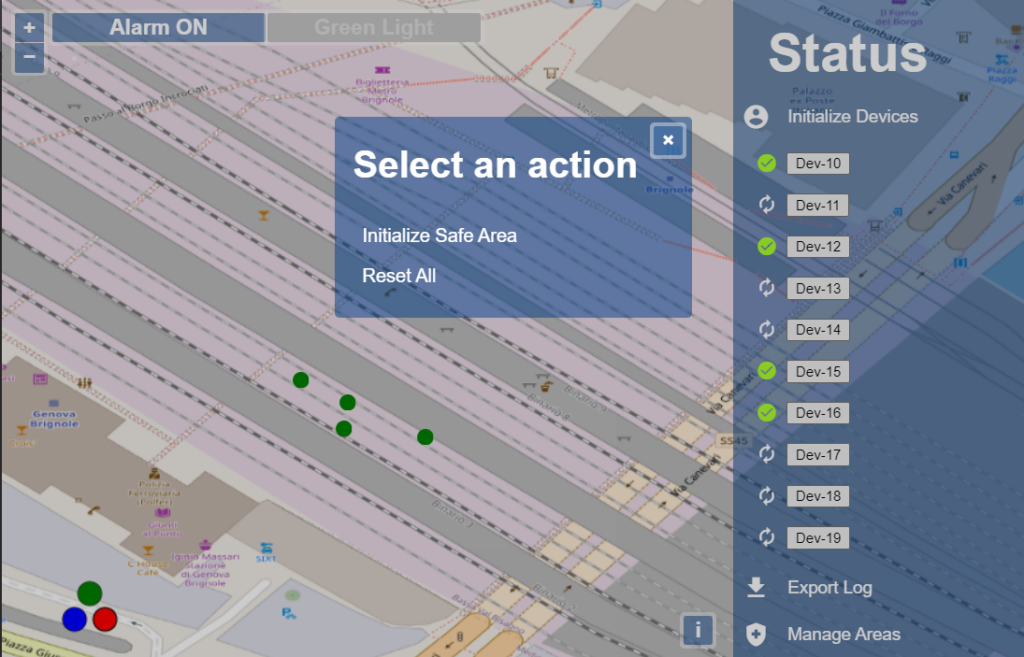
The old CSS interface:
Portable Central Supervision System
The PID’s prototype
with touchscreen
Test day
The project was funded by